
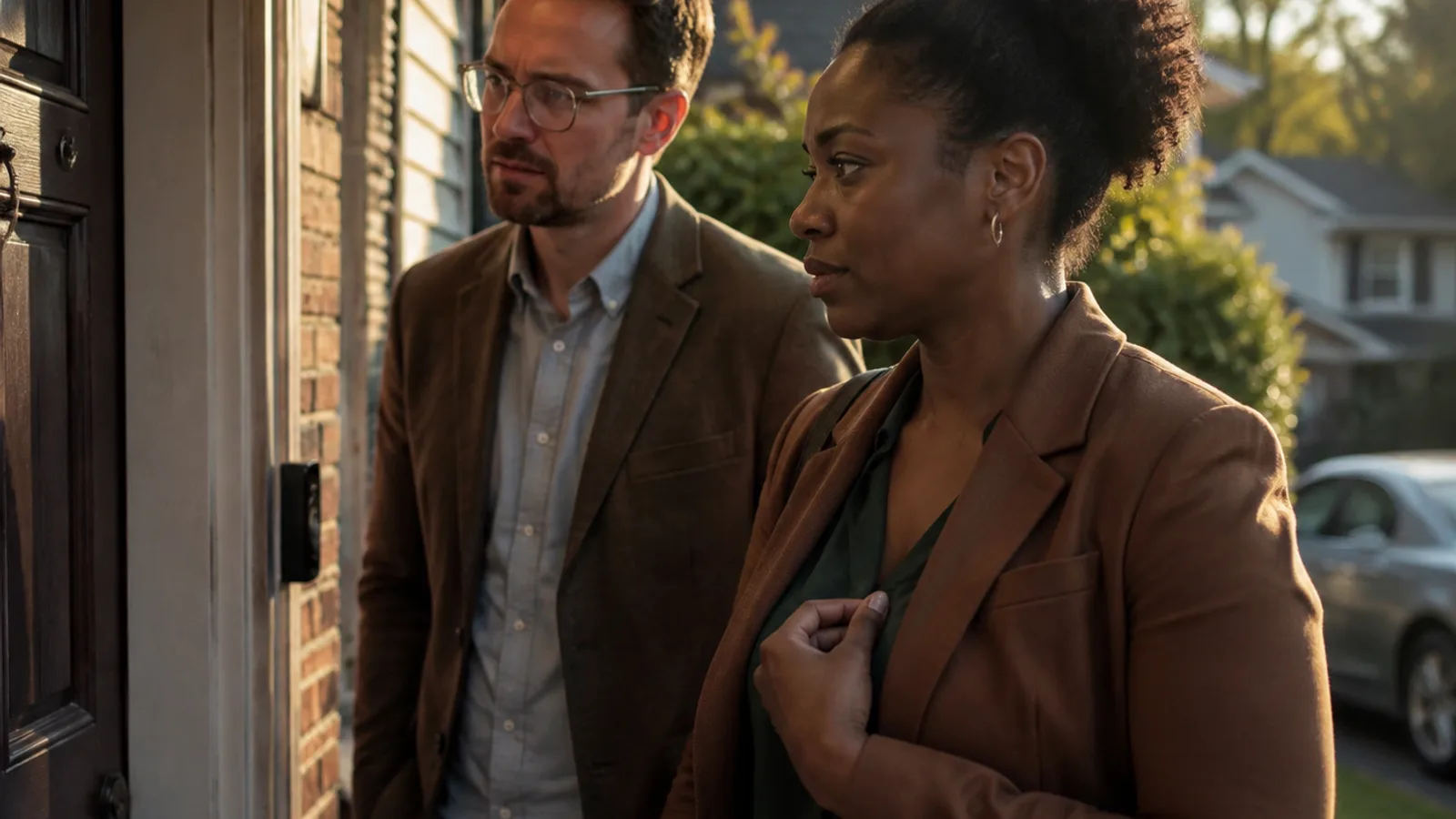
He said “My parents want to meet you this weekend.” Your stomach dropped. This isn’t just dinner—it’s an audition you didn’t ask for.
Meeting any boyfriend’s parents is nerve-wracking. But when you’re a Black woman dating a white man, there’s an extra layer: you don’t know if his family is actually okay with him dating you.
This guide covers what really happens when Black women meet white boyfriends’ parents—based on real experiences and research—so you can prepare for the questions, handle the awkwardness, and decide if this relationship is worth navigating family dynamics that might not be welcoming.
Why This Meeting Feels Different
When you’re meeting parents across racial lines, you’re not just wondering if they’ll like you. You’re wondering if they’re racist.
That’s not paranoia. According to a 2019 Pew Research Center survey, while 94% of Americans say they approve of Black-white marriages in the abstract, lived experiences of interracial couples tell a different story. Many report that meeting the white partner’s family involved questions, skepticism, or outright rejection that same-race partners didn’t face.
The most common concern Black women report: “Am I going to be the first Black person they’ve had dinner with?”
If his parents grew up in an all-white community, went to all-white schools, and have all-white social circles, you might be stepping into a situation where you’re not just meeting the parents—you’re challenging their entire worldview just by existing in their son’s life.
Before the Meeting: The Question You Must Ask
Before you agree to meet them, ask your boyfriend directly: “How do your parents feel about you dating a Black woman?”
This isn’t rude. It’s necessary.
Listen carefully to his answer:
-
✅ Good sign: “I told them early on, and they’re excited to meet you. My mom asked what you like to eat so she can make sure there’s something you’ll enjoy.”
-
⚠️ Neutral sign: “They haven’t said anything negative. I think it’ll be fine.”
-
🚩 Red flag: “I haven’t told them yet” or “It shouldn’t matter” or “You’re overthinking this.”
If he hasn’t told his parents you’re Black before the meeting, or if he gets defensive when you ask, postpone the meeting. He needs to prepare them first—and demonstrate that he’s willing to address this directly with his family.
What to Expect: The Three Types of Meetings
Based on experiences shared in interracial dating communities and relationship research, here’s what Black women report when meeting white boyfriends’ parents:
Type 1: The Warm Welcome (30-40% of experiences)
What it looks like:
- They ask about you as a person—your job, hobbies, how you met their son
- Physical affection feels natural (hugs hello/goodbye)
- They share family stories and inside jokes to include you
- Your boyfriend’s mom asks if you have dietary preferences or restrictions
What one woman said: “His mom hugged me at the door, his dad asked about my work, and they treated me like they treated his brother’s girlfriend. I was prepared for the worst, but they were just…normal parents meeting their son’s girlfriend.”
Why it happens: His parents genuinely don’t care about race, or they’ve done their own work to be welcoming. They focus on whether you make their son happy and whether you’re a good person.
Type 2: The Polite Interview (50-60% of experiences)
What it looks like:
- The questions feel more like a job interview than a dinner conversation
- They ask about your education, your parents’ professions, where you’re from
- Conversation stays surface-level and formal
- Minimal physical touch (handshake, no hug)
- Your boyfriend’s parents are polite but reserved
What one woman said: “His parents were nice, but it felt like I was being vetted. They asked what my parents do, where I went to school, what degree I have. None of his friends’ girlfriends got interrogated like that, and they were all white.”
Why it happens: His parents might have biases they’re trying to overcome, or they’re being extra cautious because they’re worried about what others will think. They’re polite but not warm because they’re still processing or evaluating.
Type 3: The Uncomfortable Reality (10-20% of experiences)
What it looks like:
- His parents are cold or barely acknowledge you
- Microaggressions or “curious” questions about Black culture, hair, or stereotypes
- Comments like “You’re so articulate” or “You’re not like other Black people we’ve met”
- Your boyfriend doesn’t speak up when his parents say something inappropriate
- After the visit, his parents tell him they “have concerns”
What one woman said: “His mom touched my hair without asking and said ‘It’s so different!’ His dad asked if I was the first in my family to go to college. When I looked at my boyfriend to jump in, he just looked uncomfortable and stayed quiet.”
Why it happens: His parents hold racist beliefs, even if they’re not overtly hostile. They may believe in racial stereotypes, feel uncomfortable with interracial relationships, or fear what their community will think.
The Questions His Parents Will Probably Ask
Here are the most common questions Black women report, and what his parents are really asking:
“What do you do for a living?”
What they’re really asking: “Are you financially stable? Are you educated?”
Why this matters in interracial context: Some white parents harbor stereotypes about Black people and poverty. They may be relieved or surprised if you have a professional job or advanced degree. This is racist, even if subtle.
How to answer: Be direct and confident. “I’m a marketing manager at [company]” or “I’m a nurse at [hospital]” or “I’m in grad school studying [field]."
"Where are you from?”
What they might mean: This is sometimes innocent geography, but sometimes it’s code for “Why are you in our white community?”
How to handle it: Answer the actual question. “I’m from Atlanta” or “I grew up in Chicago.” If they push with “No, where are you really from?” that’s a microaggression, and you can say, “I was born in Texas, if that’s what you’re asking."
"What do your parents do?”
What they’re really asking: “What’s your family’s socioeconomic status?”
Why this matters in interracial context: They may be assessing whether you’re from a “good family” by their standards. This question often comes up more frequently for Black partners than white partners.
How to answer: Be honest. Don’t inflate or apologize. “My mom is a teacher, my dad works in construction” or “My mom is a lawyer, my dad is retired."
"How did you two meet?”
What this usually is: Genuinely just curiosity about your relationship story.
How to handle it: This is usually a safe topic. Share your story naturally. “We met through mutual friends” or “We matched on [app] and bonded over our love of hiking.”
What to Wear: The Unspoken Test
Research on first impressions shows that appearance matters—and for interracial couples, there’s often an extra layer of scrutiny.
General advice:
- Ask your boyfriend: “What’s the dress code? How conservative are your parents?”
- Lean slightly more conservative than you normally would for a casual dinner
- Avoid clothing with potentially controversial imagery or slogans
The hair question: Wear your hair however you feel most confident. Natural, relaxed, braids, locs—your hair is not something to apologize for or hide. If his parents react negatively to your natural hair, that tells you who they are, not who you are.
During the Meeting: How to Navigate the Conversation
Do:
-
Ask them questions about themselves: “How long have you lived here?” “What do you do for work?” “How did you two meet?” People like talking about themselves.
-
Compliment something specific: “This meal is delicious, thank you for cooking” or “Your home is lovely.”
-
Show interest in family stories: If they share a story about your boyfriend as a kid, engage with it. “I can totally see him doing that!”
-
Let your boyfriend lead on family dynamics: He knows his family best. Follow his cues on topics, tone, and timing.
Don’t:
-
Don’t bring up race, politics, or religion unless they do first—and even then, tread carefully.
-
Don’t overshare about your relationship: Keep stories appropriate. His parents don’t need to know intimate details.
-
Don’t apologize for being yourself: If they make you feel like you need to prove you’re “good enough,” that’s their problem, not yours.
-
Don’t tolerate disrespect to keep the peace: You can be polite and still have boundaries.
If Something Goes Wrong: Red Flags to Watch For
🚩 Red Flag 1: Your boyfriend doesn’t defend you
If his parents say something inappropriate—a microaggression, a stereotype, a “joke” about race—and your boyfriend stays silent or laughs along, that’s the biggest red flag.
You need a partner who will speak up. Not aggressively, but clearly: “Mom, that’s not appropriate” or “Dad, we’ve talked about this.”
🚩 Red Flag 2: His parents ask inappropriate questions about race
Examples:
- “Can I touch your hair?”
- “Do you know who your father is?” (rooted in racist stereotypes about Black families)
- “You’re so articulate / well-spoken” (implies surprise that a Black person is educated)
- “You’re not like other Black people we’ve met”
These comments, even if said with a smile, reveal bias.
In the moment: You can educate (“Actually, that’s a stereotype”), deflect (“Let’s talk about something else”), or excuse yourself to the bathroom to regroup.
After the visit: Have a serious conversation with your boyfriend about what happened and what he’s going to do about it.
🚩 Red Flag 3: After the meeting, his parents tell him they’re “not sure” about you
If their concern is about who you are—your personality, your goals, your treatment of their son—that’s one thing. All parents have opinions.
But if their concern is fundamentally about your race (“People will judge our family,” “We’re worried about what the neighbors will think,” “Biracial grandchildren will have a hard life”), that’s racism, and your boyfriend needs to address it directly with them—not ask you to win them over or prove yourself further.
After the Meeting: What to Do Next
Debrief with your boyfriend
Ask him:
- “How do you think that went?”
- “Did anything make you uncomfortable?”
- “Is there anything your parents said that we should talk about?”
Share your honest experience. If something bothered you, say it. Don’t minimize your feelings to make him feel better.
Decide if this is sustainable
Meeting the parents is a milestone, but it’s not the finish line. Ask yourself:
- Did his parents treat me with basic respect?
- When something uncomfortable happened, did my boyfriend handle it well?
- Am I willing to navigate this family dynamic long-term?
- Does my boyfriend understand that I shouldn’t have to repeatedly “prove” myself to his family?
If the answer to most of these is “no”, you have a boyfriend problem more than a parents problem.
What If His Parents Don’t Accept You?
Here’s the hard truth: some white parents will never fully accept their son’s Black girlfriend or wife, no matter how educated, accomplished, or kind you are. This isn’t about you—it’s about their racism.
Your boyfriend’s response is what matters
If his parents reject you or make the relationship difficult, your boyfriend has choices:
Option 1: Set boundaries with his family (“If you can’t respect [partner’s name], we won’t be visiting”)
Option 2: Maintain a surface-level relationship with his parents (see them rarely, keep conversations shallow)
Option 3: Cut contact with his family (rare, but some couples do this if the family is toxic)
Option 4: Choose his family over you (this ends the relationship)
Your boyfriend’s willingness to set boundaries and prioritize you—even when it’s uncomfortable—is the real test of your relationship’s future.
You don’t have to keep trying if they’re disrespectful
Some people will tell you to “give it time” or “keep trying to win them over.” But you’re not a performer auditioning for their approval. You’re a person who deserves respect.
If his parents are unkind, and your boyfriend isn’t addressing it, you can leave. Loving someone doesn’t mean accepting mistreatment from their family indefinitely.
When It Goes Well: What Success Looks Like
Many Black women do have positive experiences meeting white boyfriends’ parents. Here’s what a good outcome looks like:
- His parents treat you the same way they’d treat any partner their son brought home
- Questions feel like genuine curiosity, not an interrogation
- Your boyfriend is relaxed and attentive to both you and his parents
- If something awkward happens, your boyfriend addresses it immediately or later with his parents
- After the visit, his parents reach out directly to you (text, social media, etc.) to say it was nice meeting you
If most of these happen, you’re in a much better position than many interracial couples face. That’s worth acknowledging and building on.
The Bottom Line
Meeting your white boyfriend’s parents as a Black woman can range from completely normal to deeply uncomfortable. You can’t control how his parents react to you, but you can:
- Prepare by asking your boyfriend direct questions beforehand
- Show up as yourself—confident, polite, but not apologetic for who you are
- Watch how your boyfriend handles challenges, because that tells you everything about your future together
- Set boundaries if his parents disrespect you
- Leave if your boyfriend won’t stand up for you
You deserve a partner whose family treats you with respect—or, at minimum, a partner who fiercely defends you when they don’t.
Related Articles
- When Your Partner Stays Silent After Racist Family Comments
- How to Handle Family Rejection in Interracial Relationships
- Cross-Cultural Communication: What Your Partner’s Family Expectations Really Mean
- When to Introduce Your Partner to Your Family: Avoiding Racial Avoidance
- Building Confidence in Interracial Dating When Others Don’t Approve